INDUSTRY INSIGHTS / 14 MIN READ
What Is Product Engineering?
/ Quick Answer
Product engineering is the end-to-end discipline of turning a business problem into a working, scalable software product and improving it after launch. It combines discovery, design, architecture, front-end and back-end development, testing, launch and iteration in one team. Software development writes the code; product engineering owns the result.
Product engineering is the work of turning a business problem into a software product that people actually use, and then keeping that product getting better after launch. It brings product thinking, design, engineering, data and testing together in one connected process, instead of passing the work from one team to the next.
Here is an easy way to remember it. Software development writes the code. Product engineering owns the result. A developer asks, "Does this feature work?" A product engineering team asks, "Does this product solve the problem, and can it grow without breaking?"
That is why product engineering matters most to founders and product managers at growth-stage SaaS and ecommerce companies. You already know the goal: more revenue, better retention, or less manual work. What you need is a team that can design the right product, build it on a scalable architecture, test it, launch it, and improve it from real usage.
In this guide, we explain what product engineering is in plain English. You will see how it differs from software development, outsourcing and product management. We walk through the product engineering process from discovery to iteration, the roles on a typical team, the most common mistakes, and a checklist for choosing a product engineering partner.
We write this from hands-on work. Gooseberry is a software company based in Chattogram, Bangladesh. We offer Product Engineering for clients, and we build our own products, including Predoxa, an AI revenue-intelligence platform. We use Predoxa's Creative Intelligence as a worked example, so you can see each stage in a real product.
What does product engineering mean?
Product engineering means taking responsibility for a software product from the first idea through launch and long-term improvement. The team does not stop when the code is shipped. It keeps asking whether the product is helping users and moving the business metric it was built for.
A simple definition
Product engineering is the end-to-end discipline of turning a business problem into a working, scalable software product. It combines product thinking, design, engineering, data and continuous iteration. You can think of it as software product development with the outcome built in.
The word "engineering" is doing real work here. It means the product is built to last: a clear architecture, clean data models, dependable integrations, proper testing, and a release process the team can repeat. The word "product" means all of that effort is pointed at a user and a result, not at a list of tickets.
What product engineering services usually include
A product engineering company covers the whole product development lifecycle. The exact scope changes from project to project, but most engagements include:
- Discovery: defining the problem, the users and the success metrics.
- UX and UI design: wireframes, user flows and prototypes.
- Architecture and technical design: the tech stack, the data model and the integrations.
- Front-end and back-end development: the interface and the services behind it.
- AI and automation layers: scoring, recommendations and workflows that remove manual work.
- Quality assurance: manual and automated testing.
- Launch and onboarding: release, handoff and training.
- Iteration: improvements based on how people really use the product.
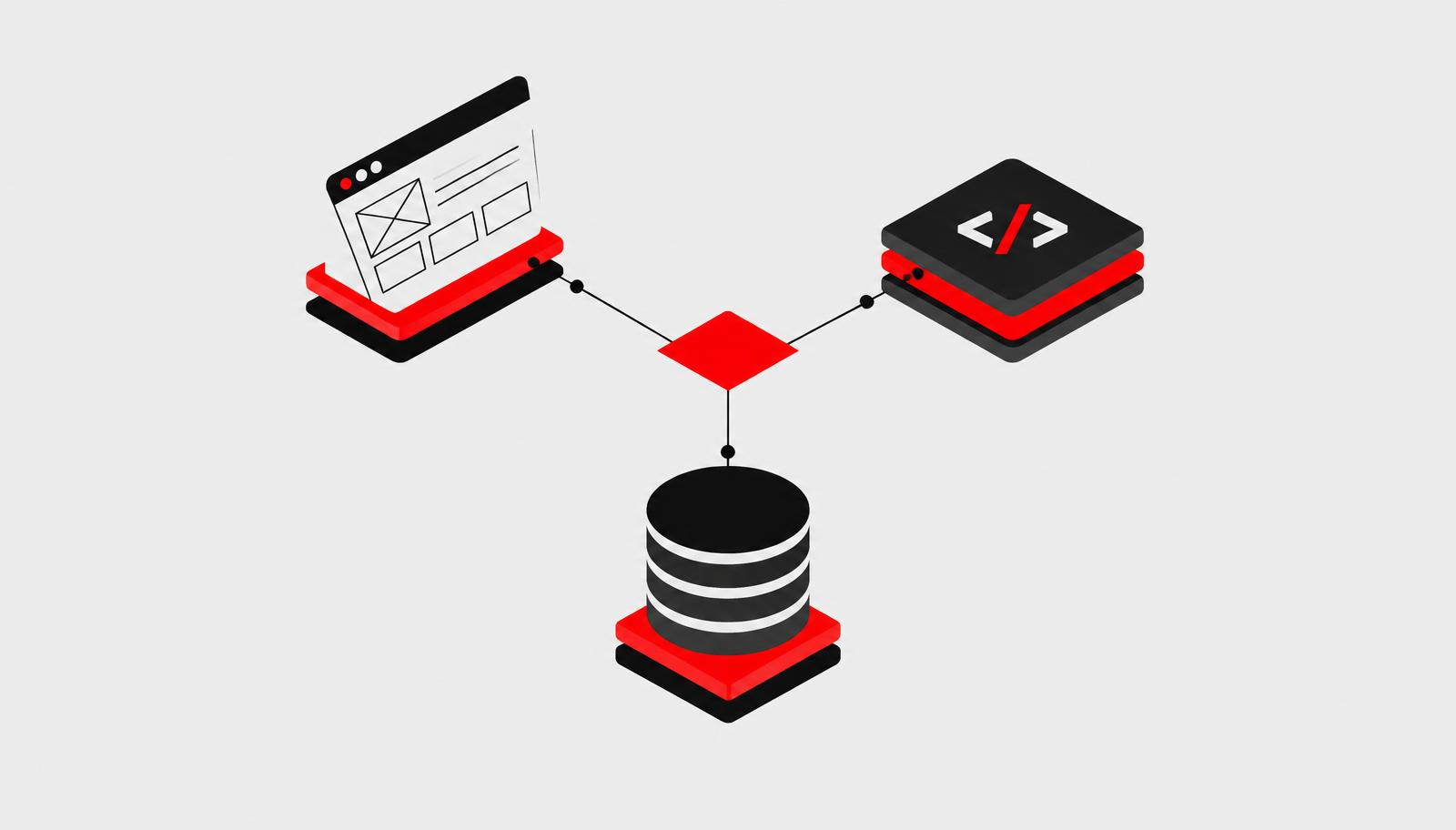
Gooseberry describes its own Product Engineering service in one line: "Front-end and back-end built together — durable interfaces on top of dependable services." That idea, one team owning both sides of the product, is the core of the approach in this guide.
Why it matters now
Software is easier to start than ever, and AI tools make a first version faster to write. That makes the hard part different. The hard part is deciding what is worth building, keeping it reliable as it grows, and improving it with evidence. Product engineering is the discipline that handles those three things together.
Product engineering vs software development, outsourcing and product management
Product engineering is broader than software development, different from task-based outsourcing, and a partner to product management rather than a replacement for it. The table shows the difference at a glance.
| Approach | Main focus | Who owns the outcome? | Where it can fall short |
|---|---|---|---|
| Software development | Writing and shipping code to a spec | The person who wrote the spec | Builds what was asked, even if the ask was wrong |
| Outsourcing (task-based) | Delivering a defined list of tasks | The client | Little reason to question scope or measure results |
| Product management | Deciding what to build and why | The product manager | Needs a team that can turn decisions into a reliable build |
| Product engineering | The whole path from problem to a working, improving product | Shared by the product and engineering team | Needs clear goals and steady access to users and data |
Product engineering vs software development
Software development is a core part of product engineering, but it is only one part. A development team usually receives a specification and delivers code. A product engineering team helps shape the specification, tests it against real user needs, and stays involved after release.
Product engineering vs outsourcing
Outsourcing is a way of buying work. Product engineering is a way of working. You can outsource product engineering to a partner, and many companies do. The difference is in what you buy: a partner who only delivers tasks, or a partner who shares responsibility for the result.
Product engineering vs product management
The two roles fit together. Product management owns the "what" and the "why": which problem to solve and how to know it worked. Product engineering owns the "how" and the "build": the design, architecture, code, testing and iteration that make it real. The best results come when both sit close to each other and share the same metrics.
Our view
This is our opinion, based on how we work: the label matters less than the behaviour. A good partner will question your scope, ask for a success metric before writing code, and keep improving the product after launch. If a team never pushes back, you are probably buying task delivery, whatever it calls itself.
The product engineering process: 7 stages from idea to improvement
A good product engineering process has seven stages: discovery, design, architecture, build, testing, launch and iteration. These are the stages Gooseberry works through. The order matters, because each stage depends on the one before it. For each one, we also note what usually breaks if you skip it.
1. Discovery
Discovery is where the team learns the problem, the users and the success metrics. The output is a short, clear problem statement and a number that tells everyone what "working" means, such as conversion rate, retention or hours of manual work saved.
What breaks if you skip it: you build a polished product for a problem nobody has, then wonder why adoption is low.
2. Design and UX
Design turns the problem into wireframes, user flows and clickable prototypes. Testing a prototype with real users is far cheaper than changing finished code.
What breaks if you skip it: developers guess the user experience while building, and the product needs expensive rework after the first feedback.
3. Architecture and technical design
Here the team chooses the stack, the data model and the integrations. For a marketing or ecommerce product, this often means deciding how data from ad platforms, stores and analytics tools will flow in safely and stay accurate.
What breaks if you skip it: the first version works, but every new feature gets slower and riskier. This is how technical debt starts.
4. Build: front end and back end together
Building covers the interface, the services behind it, and any AI or automation layers. Building both sides together matters because many bugs and slow experiences live in the gap between them.
What breaks if you skip it: you cannot skip building, but you can split it badly. When separate teams own each side without a shared plan, you get screens that do not match the data and endpoints that nobody uses.
5. Quality assurance and testing
Testing combines manual checks with automated tests. It covers the happy path, the edge cases, performance and security. For AI features, it also means checking that scores and recommendations behave sensibly on real data.
What breaks if you skip it: users find the bugs for you, and trust is harder to win back than it was to lose.
6. Launch and onboarding
Launch is more than pressing deploy. It includes a safe release, monitoring, handoff documents and helping the first users get value quickly.
What breaks if you skip it: a working product sits unused because nobody knows how to start, or a small release problem becomes a big outage.
7. Iteration and optimization
Iteration is the stage that most separates product engineering from a one-off project. After launch, the team reads real usage data and feedback, then improves the product in small, measurable steps.
What breaks if you skip it: the product slowly drifts away from what users need, and you pay for a rebuild later instead of small fixes now.
Why the stages overlap in practice
On paper the stages look like a straight line. In practice, discovery continues during design, and testing starts during build. The point is not to follow a rigid checklist. It is to make sure every stage has an owner and a purpose, so nothing important is left to chance.
Who is on a product engineering team?
A typical product engineering team has a product lead, a designer, front-end and back-end engineers, an AI or automation engineer, a QA engineer, and, for client-facing products, a growth or marketing partner. The exact mix depends on the product. A small internal tool may need fewer people than a customer-facing SaaS platform.
| Role | What they do | Why it matters |
|---|---|---|
| Product manager or product lead | Defines the problem, priorities and success metrics | Keeps the team building for an outcome |
| UX/UI designer | Creates flows, wireframes and prototypes | Makes the product easy to use before code is written |
| Front-end engineer | Builds the interface people see and use | Turns design into fast, reliable screens |
| Back-end engineer | Builds services, data models and integrations | Keeps the product dependable as it grows |
| AI/automation engineer | Builds scoring, recommendation and workflow layers | Removes repetitive work and adds decision support |
| QA engineer | Runs manual and automated tests | Catches problems before users do |
| Marketing/growth partner | Plans launch, onboarding and adoption | Helps a good product reach the people who need it |
The key is not the job titles. It is that these people work as one team with shared goals, instead of as separate vendors who only meet at handoffs.
A real example: how Creative Intelligence was product-engineered
Creative Intelligence is a good example of the process in action, because it started with a plain business problem and was shaped by real use. It is part of Predoxa, the AI revenue-intelligence platform Gooseberry builds for ecommerce and SaaS brands. This account of how it was built comes from the Gooseberry team.
The problem came first
Ecommerce brands were guessing which ad creatives worked. Teams reviewed ads by hand, trusted gut feeling, and kept rebuilding similar concepts. Budget kept flowing to ads that were not earning it. That is a discovery finding, not a feature idea, and it set the goal: help teams know what to scale, fix or stop.
What the team built
The team built an AI scoring layer that rates each ad on five signals: Hook, Hold, Click, Engagement and Profit. On top of the scores sits a decision engine, which Predoxa calls the PREDOXA decision engine, that tells the team what to do next. You can read the product description on the Creative Intelligence page. Predoxa does not publish the scoring formulas, so we do not describe them here.
| Stage | How it shows up in Creative Intelligence |
|---|---|
| Discovery | Brands guessing which creatives work and wasting spend |
| Design | Scores and recommendations that a media buyer or strategist can read quickly |
| Architecture | A data layer that connects ad platforms and store data to the scoring model |
| Build | AI scoring plus a decision engine and reports |
| Iteration | The scoring model and recommendation logic were adjusted using real campaign data and user feedback |
The two reports behind the decisions
Two reports turn the scores into action. Each is aimed at a different person with a different decision.
- Top Spend Creatives shows where budget is concentrated and flags waste. Media buyers use it to move spend.
- Top Performing Creatives shows winners by profit, not only ROAS. Creative strategists use it to decide what to scale and what to iterate on.
The reports show the five scores alongside spend, ROAS, revenue and recommendations. Putting them side by side is the engineering point: a high ROAS ad with weak profit is a different decision from a low-spend ad that hooks well.
Before and after
- Before: teams reviewed ads manually, guessed what worked, and rebuilt similar concepts again and again.
- After: every ad is scored automatically, wins and leaks are surfaced, and the team gets a prioritized list of next actions, so they spend time scaling proven creative instead of guessing.
This is a qualitative before-and-after from the team that built it. It is not a measured result, and we do not claim a number for it.
What the example teaches
Notice the order. The problem came first. The build followed. And the product kept changing after launch because real data showed where the first model could be better. That loop is the heart of product engineering.
Proof from the field: why outcome metrics matter
Product engineering is easier to trust when the product is tied to a number that clients care about. Predoxa's published case studies show the kind of outcome the platform is built for. One of them is Prime Streetwear NY.
According to the Prime Streetwear NY case study on Predoxa's site, the brand's ROAS (return on ad spend) moved from 4.67 to 8.17. That is an increase of about 75%. The same page describes weak retargeting and repeat-purchase triggers as part of the starting picture.
Two cautions keep this honest. First, these are results reported by Predoxa on its own site, and we have not independently audited them. Second, the page does not separate which single change caused the improvement, so we do not claim that one feature produced it.
The lesson for product engineering is the habit, not the number. Good teams pick the outcome metric first, build toward it, and then check whether it moved. If you cannot name the number a product should change, the discovery stage is not finished.
Predoxa lists more client stories on the same case studies page, including Glow & Smile and BuyXot Energy. They are marketing-results stories, not engineering project write-ups, so we point to them as examples of outcomes rather than as a description of how any build was done.
Our view: three opinions on how to do product engineering well
The points below are Gooseberry's opinions, not industry rules. We share them so you can test them against your own situation.
1. Buy the commodity, build only what makes you different
Payments, email delivery, login and basic analytics are solved problems. Buying them saves months. Build only the part that gives your business an edge, such as a scoring model, a workflow or a data layer nobody else has. Every custom component you build is one more thing you must maintain for years.
A quick test: if a competitor could buy the same thing tomorrow, it is not your advantage, so do not spend your best engineers on it. For a shortlist of what to buy, see our guide to the best automation tools for business.
2. Use AI-assisted development, but review everything
AI coding assistants can speed up routine work, from boilerplate to tests to documentation. We think teams should use them. We also think speed without review is a risk. Generated code can hide security gaps, wrong assumptions and logic that looks right but is not. A human reviewer who understands the product should check what ships.
The same applies when AI is part of the product itself. Scores and recommendations should be tested on real data before users rely on them.
3. One product team usually beats separate design and development vendors
When design, front end, back end and QA sit in one team, feedback travels fast. A designer can see how a screen behaves with real data. An engineer can raise a concern before the design is final. When these jobs are split across vendors, every handoff adds delay and every vendor protects its own scope.
This is not always true. A clearly defined, one-time task can be a good fit for a specialist. But for a product that must keep evolving, we prefer one team that owns the result.
Where we might be wrong
A single team can become a bottleneck if it is too small, and an outside specialist can bring depth that a generalist team lacks. The right setup depends on your size, your budget and how fast the product needs to change.
The most common product engineering mistakes
The most common mistake is building before validating. Teams jump straight to coding without a clear problem statement or a feedback loop with users, then wonder why adoption is low. The other mistakes below usually grow from the same root.
1. Building before validating
A product idea feels obvious to the people who had it. That feeling is not evidence. Before you build, talk to the users, test a prototype, and write down the one metric that should move. Validation does not need to be slow. A week of conversations and a clickable prototype can save months of development.
2. Measuring features instead of outcomes
"We shipped twelve features" says nothing about whether users are better off. Track the result the product exists for: revenue, retention, time saved, or fewer support tickets.
3. Treating launch as the finish line
Many teams celebrate launch and move on. The first release is the start of learning, not the end of the work. Plan the iteration stage and budget for it from the beginning.
4. Skipping architecture to move fast
Speed matters, especially for an MVP. But a rushed data model or a tangle of one-off integrations makes every later change slower. A short architecture stage costs days. Fixing a weak foundation can cost months.
5. Splitting design and engineering too far apart
When design is finished before engineers see it, problems appear late. Bring engineers into design early so the team catches technical limits and data gaps while changes are still cheap.
6. Trusting AI output without checking it
Whether AI helps write the code or powers a feature, someone has to verify the results. Unchecked output is how small errors become public ones.
A quick self-check
- Can you state the problem in one sentence?
- Do you know the number the product should change?
- Have real users seen a prototype?
- Is someone responsible for what happens after launch?
If you answer "no" to any of these, go back to discovery before you write more code.
How to choose a product engineering partner
Choose a product engineering partner by checking six things: how they handle the full process, how they work with your team, which integrations they can build, how they price the work, whether they have built their own products, and how they respond when they disagree with you. The table gives you a simple scoring framework.
Give each criterion a score from 1 to 5, then compare partners side by side.
| Criterion | What good looks like | Red flag |
|---|---|---|
| Full-process coverage | Discovery, design, architecture, build, QA, launch and iteration are all offered | Only "development hours" on offer |
| Team model | One team across design and engineering, with a named product lead | Separate vendors and many handoffs |
| Integrations and data | Experience with the tools you use, such as your store, ad platforms or analytics | Vague answers about how data will flow |
| Pricing and scope | Clear scope, a success metric, and a plan for post-launch work | Fixed scope with no room to learn |
| Own-product experience | They have built and run products of their own | No product they can show or explain |
| Willingness to push back | They question scope and ask for a metric before coding | They agree to everything |
Questions to ask in the first call
- What metric will tell us this product is working?
- Who is on the team, and who is my day-to-day contact?
- How do you handle testing, and where does AI-assisted code get reviewed?
- What happens after launch, and how is that work priced?
- Can you show a product you built and explain what you changed after real use?
Why own-product experience matters
In our experience, a team that builds and runs its own products learns what good looks like: fast iteration, real-user feedback loops, and outcome-focused metrics. Gooseberry builds Predoxa, Flxypi, Adzdrip and AirlogiQ alongside its client work, and we think that habit carries into the way we challenge scope on client projects. That is our view, and you should judge any partner, including us, by the answers to the questions above. If you are comparing vendors locally, our list of the top 10 software companies in Bangladesh is a useful starting point.
Security basics to confirm
Whatever partner you choose, ask about access control and multi-factor sign-in, encryption, audit logging, and how any AI agents are limited in what they can touch. These are standard questions, and a serious team will answer them clearly.
When do you need product engineering, and when do you not?
You need product engineering when the software is central to your growth, will keep changing, and has to work with other systems. You probably do not need it for a small, fixed task that a single developer or an off-the-shelf tool can handle.
Signs you need a product engineering partner
- You are building a SaaS product, a customer-facing platform or an internal tool the business depends on.
- The product must connect to stores, ad platforms, analytics or payment tools.
- You want AI or automation features, not just screens.
- You have a clear business goal but no in-house team that can design, build and test end to end.
- Past projects shipped on time but did not move the numbers.
Signs you may not need it yet
- You are still testing whether anyone wants the idea. Start with interviews and a simple prototype first.
- A ready-made tool already solves the problem well enough. Buying is usually faster and cheaper.
- The work is a small, well-defined fix, such as a landing page update or a single integration.
A practical starting point
If you are unsure, begin with a short discovery phase. It gives you a clear problem statement, a success metric and a rough plan, and it lets you judge the partner before committing to a full build. If the discovery shows that you do not need a custom product, that is also a useful result.
Frequently asked questions about product engineering
What is product engineering in simple words?
Product engineering is the process of turning a business problem into a working software product and then improving it with real feedback. It covers discovery, design, architecture, development, testing, launch and iteration in one connected effort.
What is the difference between product engineering and software engineering?
Software engineering focuses on designing and writing reliable code. Product engineering includes that, but also covers product discovery, user experience and post-launch improvement, so the team is responsible for the outcome and not only the code.
What do product engineering services include?
They usually include discovery, UX and UI design, architecture, front-end and back-end development, AI and automation work, quality assurance, launch support and ongoing iteration. The exact scope depends on the product.
What are the stages of the product engineering process?
The seven stages in this guide are discovery, design and UX, architecture and technical design, build, quality assurance, launch and onboarding, and iteration. They overlap in practice, but each needs a clear owner.
Who should use a product engineering company?
Founders, product managers and operators at growth-stage SaaS and ecommerce companies often benefit most. It is a good fit when software is central to the business, the product will keep changing, and the team lacks the people to design, build and test end to end.
Is product engineering the same as outsourcing?
No. Outsourcing describes how you buy work, usually as a list of tasks. Product engineering describes how the work is done, with shared responsibility for the result. You can outsource product engineering, but the partner should still own outcomes, not only tasks.
How is AI used in product engineering?
AI can help in two ways. It can speed up development tasks such as writing tests and documentation, and it can power product features such as scoring, recommendations and automation. In both cases, a human should review the results. Creative Intelligence, described above, is an example of an AI scoring layer built into a product.
How long does a product engineering project take?
It depends on scope, team size and how clear the goals are. A short discovery phase is the best way to get a realistic plan. We do not quote a standard timeline here, because it would vary too much to be useful.
What is the best first step?
Write down the problem in one sentence and the number you want the product to change. Then talk to a few real users. That small effort makes every later stage cheaper and clearer.
Your next step
Product engineering works best when you start with the problem and the number you want to change. If your problem is wasted ad spend and guesswork about which creatives work, you can see the idea in action in a real product — explore Campaign Intelligence.
If you would rather talk about your own product, you can contact the Gooseberry team and start with a short discovery conversation.
/ Gooseberry
"We don't build tools to impress. We build tools to perform."
Explore Automation Products