
INDUSTRY INSIGHTS / 11 MIN READ
Gooseberry Selected for OnnoRokom Uddokta Cohort 3.0
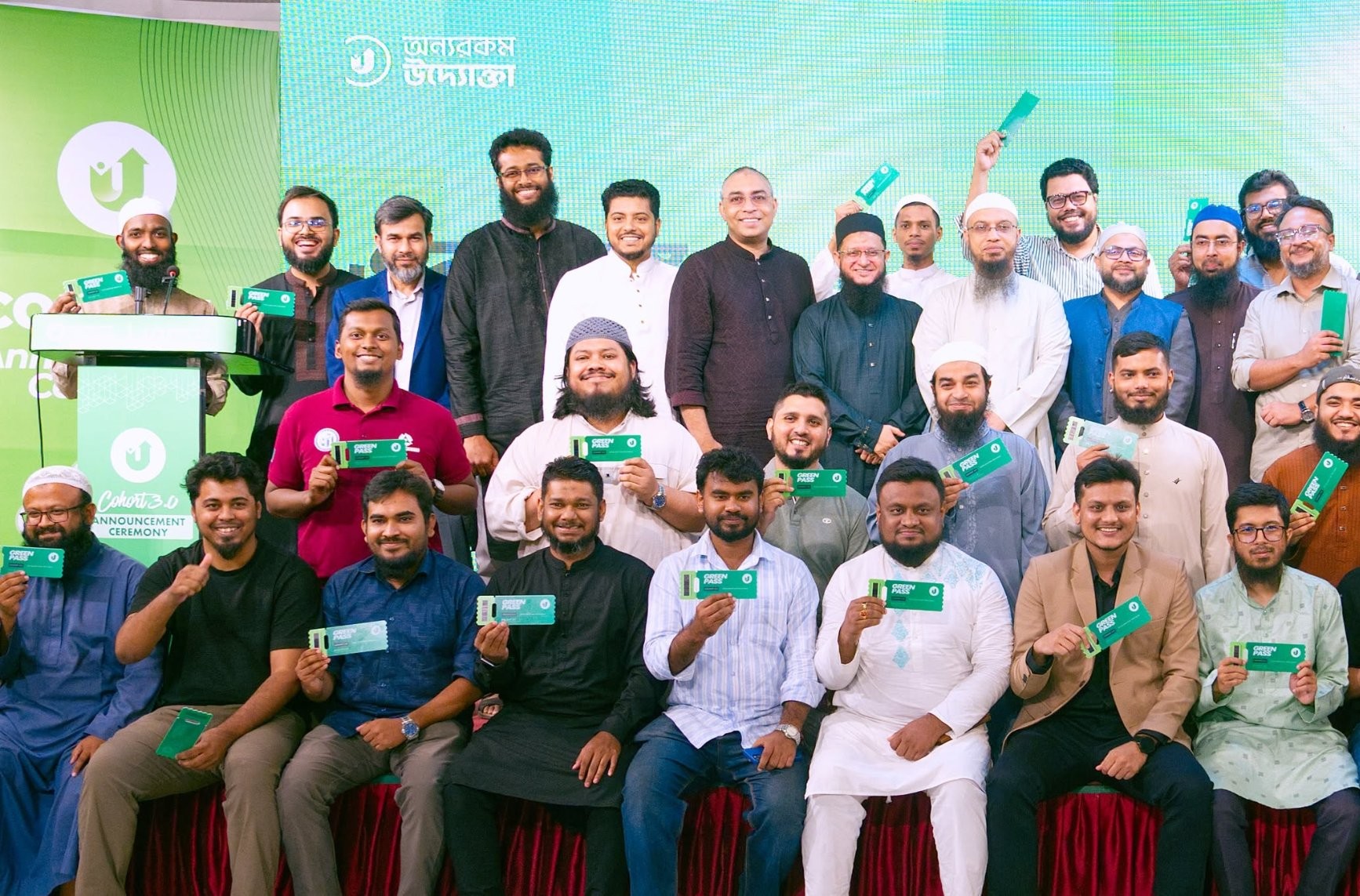
Gooseberry, a software company based in Chattogram, Bangladesh, has been selected for OnnoRokom Uddokta Cohort 3.0 (অন্যরকম উদ্যোক্তা), a six-month acceleration program for Bangladeshi businesses. According to press coverage of the announcement, the cohort includes 26 businesses chosen from nearly 8,000 applications. We shared the news on our Facebook page on November 5, 2026.
This guide answers the questions founders usually ask when they hear news like this. What is OnnoRokom Uddokta? How big is Cohort 3.0? What does an acceleration program involve? And what should you do if you want to apply for a future cohort?
We are keeping this post honest. The program details come from public reporting by Future Startup. The facts about Gooseberry come from our own website and products. Where we describe general good practice for founders, we say so, so you can tell it apart from what we know first-hand.
A short note on who we are. Gooseberry builds intelligent marketing tools and offers Product Engineering and Automation services to businesses. Our products include Predoxa, an AI revenue-intelligence platform for ecommerce and SaaS brands. Our website lists 500+ projects, 5+ years in business and a team of 15+.
If you are a founder in Chattogram, Dhaka or anywhere else in Bangladesh and wondering whether an accelerator is right for you, read on. You will find the program facts, a checklist for preparing an application, and a short list of questions to help you decide.
What is OnnoRokom Uddokta?
OnnoRokom Uddokta is a six-month acceleration program for Bangladeshi startups and small and medium businesses. OnnoRokom Group, a Dhaka-based group with businesses in education, technology, electronics manufacturing, e-commerce and publishing, launched it in June 2025. The name অন্যরকম উদ্যোক্তা is Bengali for "a different kind of entrepreneur."
How the program has grown
| Cohort | Businesses selected | Reported by |
|---|---|---|
| Cohort 1 (June 2025) | 21 | Future Startup, June 2025 |
| Cohort 2.0 (February 2026) | 31 | Future Startup, February 2026 |
| Cohort 3.0 (November 2026) | 26, from nearly 8,000 applications | Future Startup, November 2026 |
A founder-first approach
Press coverage describes a "founder-first" approach. According to the Cohort 3.0 report, the program looks for founders who show commitment, learning ability, resilience and a sense of responsibility. It welcomes businesses of any sector or size, from emerging startups to growing SMEs, and it targets businesses that are already operating and preparing to grow, not idea-stage ventures.
What the program format looks like
For Cohort 3.0, the report mentions day-long monthly sessions over six months. Earlier coverage gives more detail for the first cohort, such as 17 modules, one-on-one mentoring sessions, weekly co-working and pitch sessions. Those details were reported for earlier cohorts, so we do not claim they apply to Cohort 3.0.
Who is behind it
OnnoRokom Group launched the program. The Cohort 3.0 report also mentions Legacy Ventures, a Singapore-based think tank and startup accelerator that the article says was built by the team behind OnnoRokom Uddokta.
What we cannot say
The articles we read do not state funding amounts, equity terms, fees, selection stages or application deadlines. They also do not list the selected companies, so our selection is confirmed by our own announcement. The program has said earlier participants grew between 2x and 10x in six months. Press reports present that as the program's own claim, and two reports describe the range differently, so we do not rely on it.
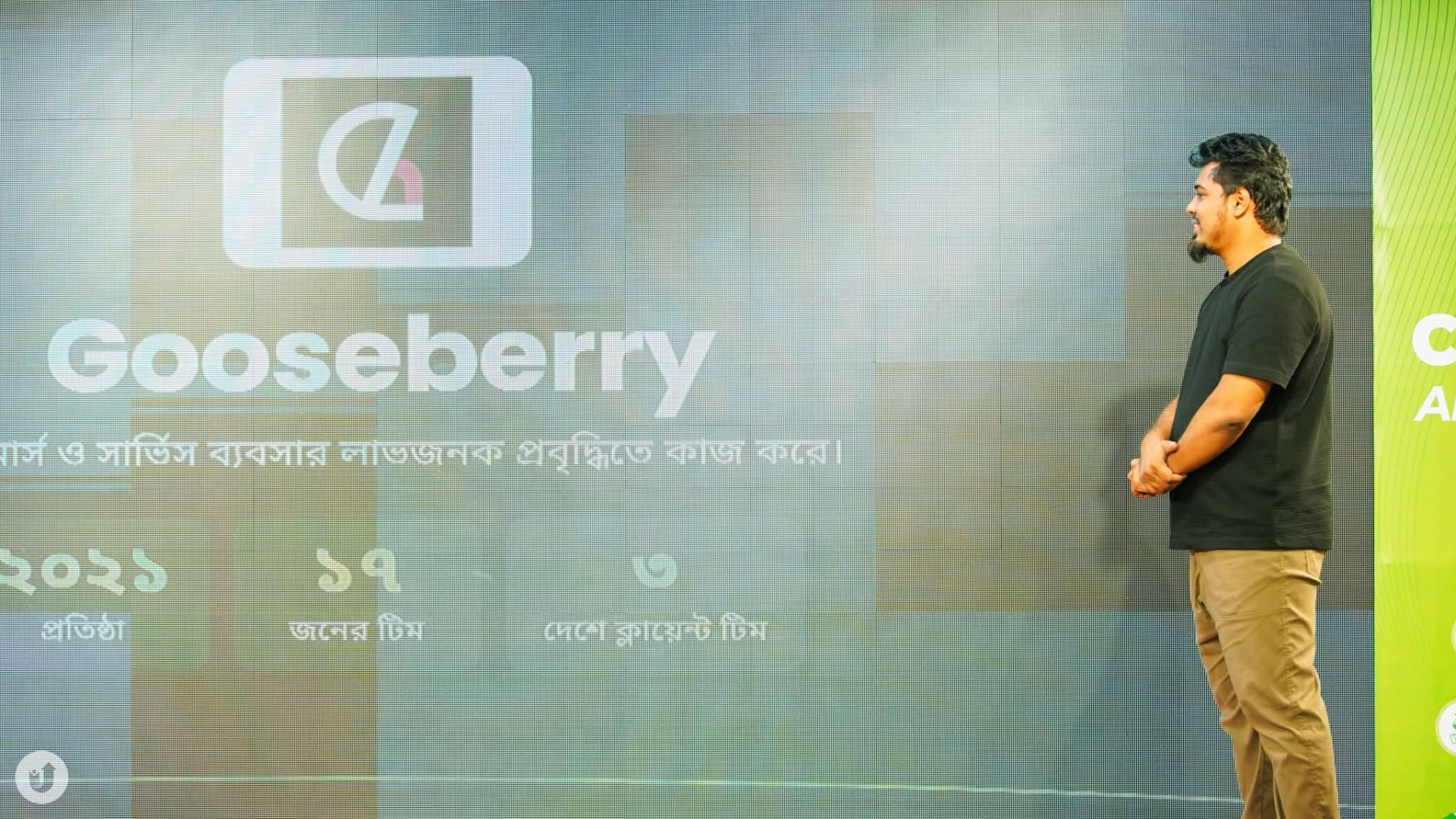
OnnoRokom Uddokta Cohort 3.0 at a glance
Cohort 3.0 selected 26 businesses from nearly 8,000 applications and runs for six months. The table gives the quick facts with their sources, so you can check each one.
| Question | Answer | Source |
|---|---|---|
| What is the program? | OnnoRokom Uddokta, a business acceleration program for Bangladeshi founders | Future Startup |
| Which cohort is this? | Cohort 3.0 | Future Startup |
| How many businesses were selected? | 26 | Future Startup |
| How many applications were received? | Nearly 8,000 | Future Startup |
| How long does it run? | Six months | Future Startup |
| What is the format? | Day-long monthly sessions | Future Startup |
| Where was the announcement ceremony? | Dhaka, on November 2, 2026 | Future Startup |
| Who launched the program? | OnnoRokom Group, in June 2025 | Future Startup |
| Is Gooseberry in Cohort 3.0? | Yes, announced by Gooseberry on its Facebook page on November 5, 2026 | Gooseberry's own post |
| Funding or equity terms? | Not stated in the coverage we read | n/a |
A note on the numbers
Our Facebook announcement says "over 8,000 companies." The press report says "nearly 8,000 applications." In this post we use the press wording, because it is the figure we can point to.
Who is Gooseberry?
Gooseberry is a software company based in Chattogram, Bangladesh. We build intelligent marketing tools that help businesses grow faster and achieve their goals with clarity. We also offer services to other businesses, including Product Engineering and Automation. Read the longer story in What Is Gooseberry?
What we do
- Product Engineering: front end and back end built together, so you get durable interfaces on top of dependable services.
- Automation: systems that handle the repetitive work, so your team can focus on decisions.
- Our own products: Predoxa, Flxypi, Adzdrip and AirlogiQ, all listed on our products page.
Our story in numbers
Our website lists 500+ projects, 5+ years in business and a team of 15+. These figures come from our own site, so treat them as company-reported.
How we grew
The timeline on our About page is simple. In 2021 we worked from a virtual office. In 2023 we opened an office in Chittagong. In 2024 we started building our own technology, starting with Predoxa and Doxa AI. The page also says more products are in development for 2026.
That path, from client services to building our own products, is the background to this news.
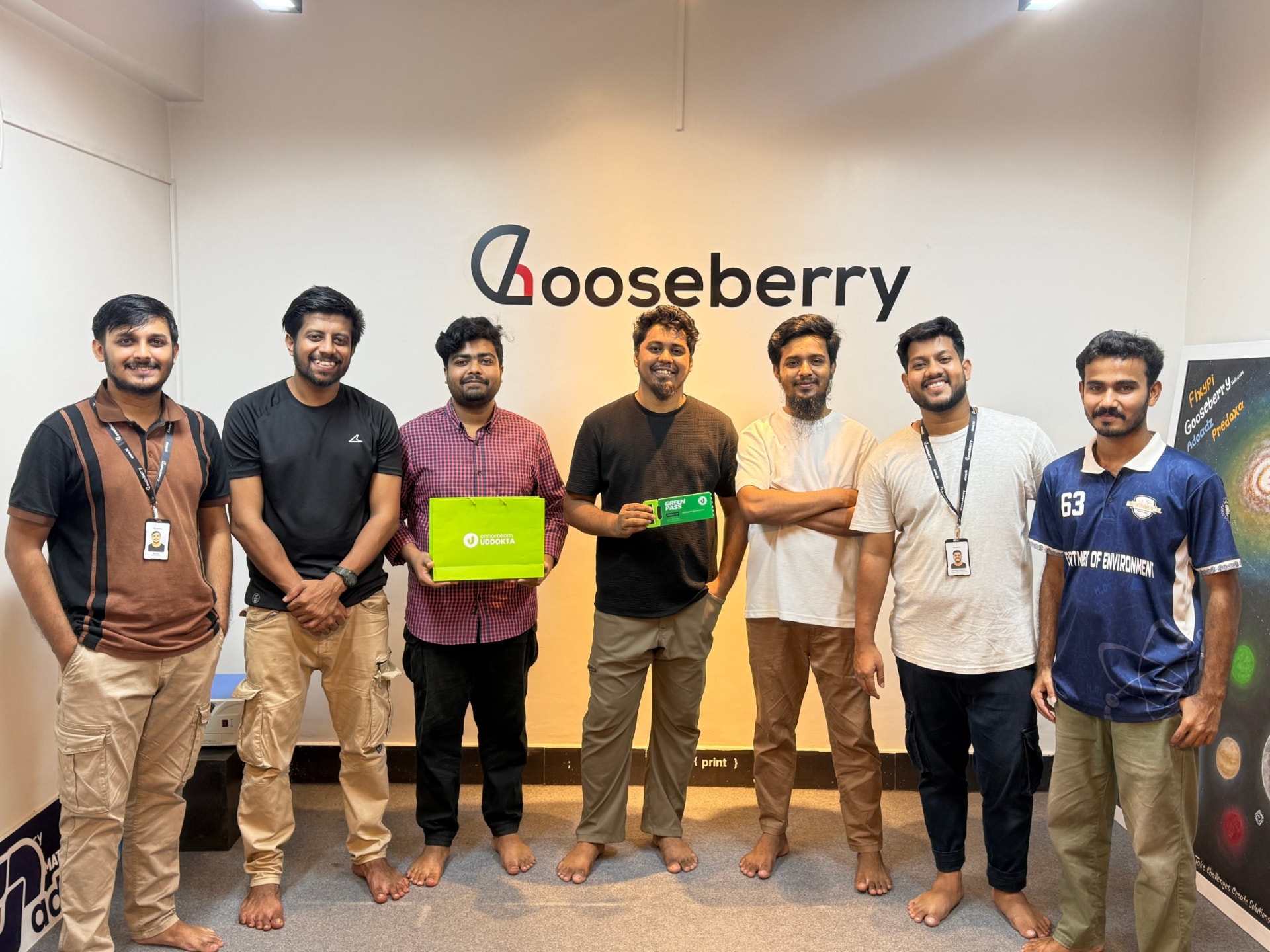
Predoxa: the product at the center of our story
Predoxa is Gooseberry's revenue intelligence platform for ecommerce and SaaS brands. It combines AI tools with human strategists and media buyers, and it connects Meta Ads, Google Ads, Shopify and GA4. Its site speaks to founder-led Shopify and DTC brands spending roughly $5k to $150k or more a month on ads.
What Predoxa includes
- Creative Intelligence: AI scoring of every ad creative on Hook, Hold, Click, Engagement and Profit, using the PREDOXA decision engine.
- Analytics Dashboard: a unified view across channels, with an AI assistant called Ask Doxa.
- Performance Marketing: bid management, budget allocation, audience research and ROAS optimization.
- Growth Marketing: retention, conversion optimization, lifecycle marketing and full-journey analytics.
How it works in four steps
- Connect your ad, store and analytics accounts.
- AI agents flag wins, leaks and opportunities.
- You receive prioritized recommendations, with human support.
- You shift spend and iterate on creative.
Why it matters for this story
Building our own technology is a different job from delivering client projects. You own the roadmap, the quality and the results, and you answer to users instead of a brief. Predoxa is the first product named in that part of our timeline.
Proof from client case studies
An acceleration program asks founders to show traction, so here is ours. The table lists results as Predoxa reports them on its case studies pages. We opened each page on 2026-11-09. These are self-reported figures, and we have not audited them.
| Client | Industry | Reported results | What to know before you rely on it |
|---|---|---|---|
| Free The Roots | Hair care, DTC | 5.31× average ROAS, 7.46× for the best ad set, 85% less wasted ad spend, $148,352.05 revenue from ads | The page gives no baseline and does not explain how the 85% was calculated |
| Dancelib | Digital dance education | 3× ROAS across core markets, 11,000+ app users, 2,500+ paid users | No time period or ROAS baseline is stated |
| BuyXot Energy | Natural energy drinks | 7.8× ROAS across paid channels, Meta Ads revenue up 67%, returning buyers up 62%, 40% less wasted ad spend | The page title says 7x while the body says 7.8x, and no baselines are given |
| Glow & Smile | Skin and bodycare, UK and US | Purchases from 1,090 to 1,377, conversion value from £27,284.01 to £34,758.32 | The stated percentages are slightly off when recalculated; no spend or ROAS is given |
| The Pain Management Group | Healthcare | 865+ qualified patient leads, cost per result under $3.04, 4.8× Google Ads ROAS | The ROAS is labelled an estimate, and the page title's 312% lead increase is not explained in the body |
What the cases have in common
Several of these pages describe the same starting point: fragmented data, decisions made by instinct, and ad spend that was not tied clearly to results. The actions they describe are also similar. Teams paused underperforming ads, moved budget to better ones, tested creative, and restructured campaigns by audience or location.
We point this out because it is the pattern we built Predoxa to help with. It is our reading of the pages, not a claim that one method caused every result. For more on this, see How Marketing Automation Saves Small Teams 20 Hours a Week.
How to read case studies like these
A vendor's case study is a starting point, not a guarantee. Look at the size of the brand, the time period, what else changed, and whether the page explains how each number was measured. On these pages, baselines and time periods are often missing, so we encourage you to ask us for details before you compare them with your own business.
How to prepare for an accelerator application: a checklist
To prepare for an accelerator application, start with the program's own criteria, then gather your numbers, your story and your evidence. This checklist is general practice for founders. It is not a description of how we applied, and it does not reveal what any selection panel looks for beyond what the program has published.
The steps are in dependency order, and each one notes what breaks if you skip it.
- Read what the program says it values. For OnnoRokom Uddokta, the press describes a founder-first approach that looks for commitment, learning ability, resilience and a sense of responsibility, in businesses that are already operating. What breaks if you skip it: you write about your product when the reader is also asking about you.
- Describe your business in one plain sentence. Say who you serve, what problem you solve and how you make money. What breaks if you skip it: every later answer sounds vague.
- Gather your real numbers and define each one. Revenue, customers, retention or other measures, with dates and a clear meaning. What breaks if you skip it: numbers without definitions invite doubt, and mismatched figures across documents look careless.
- Collect proof you can show. Customer results, case studies, product screenshots, or a live demo. Prefer figures you can explain. What breaks if you skip it: claims stay claims.
- Prepare examples of learning and resilience. Be ready to explain something that went wrong, what you changed and what happened next. What breaks if you skip it: you have nothing concrete to say when asked about setbacks.
- Name your biggest gap and what you want to learn. Be honest about it. What breaks if you skip it: you cannot explain why you need the program.
- Check you can commit the time. For Cohort 3.0, the press mentions day-long monthly sessions across six months, so look at your calendar and your team's capacity. What breaks if you skip it: you are selected and cannot show up fully.
- Check every fact before you submit. Match names, dates, figures and spelling across your application, website and social pages. What breaks if you skip it: small mismatches reduce trust.
Why consistency matters
Small mismatches are easy to make. A social post may say "over 8,000 companies" while press coverage says "nearly 8,000 applications." Pick one source for each figure and use the same wording everywhere.
Accelerator or bootstrapping? Questions to weigh
Whether an accelerator is right for you depends on what is holding your business back. This section is general guidance for founders, not Gooseberry's opinion on any one path. The questions below can help you decide.
| Question to ask yourself | If yes, an accelerator may help | If no, bootstrapping may be enough |
|---|---|---|
| Do I need structure and accountability? | A fixed program gives you a schedule and deadlines | You already run to a steady plan |
| Do I need introductions and a network? | Programs often connect you with mentors and peers | You already know the people you need |
| Is my business already operating? | Programs like this one say they look for operating businesses | You are still testing an idea and need to talk to users first |
| Can I give the time? | You can attend sessions and do the follow-up work | Your team is stretched and cannot add commitments |
| Do I know what I want to learn? | You can name specific gaps | You cannot yet say what you need |
Remember what a program cannot do
A program can give you structure, feedback and connections. It cannot own your product or your numbers for you. You still have to build, sell and measure. If you are not clear on those basics, no program will fix that.
Building outside the capital
Many Bangladeshi founders build outside Dhaka. Being based elsewhere can mean fewer local events and a smaller visible network, so it helps to be deliberate about where you meet peers and mentors. That is a general observation. We are not claiming the experience of every founder in Chattogram. For a wider view of the local industry, read Top 10 Software Company in Bangladesh 2026.
Frequently asked questions
What is OnnoRokom Uddokta?
OnnoRokom Uddokta is a six-month acceleration program for Bangladeshi startups and small and medium businesses, launched by OnnoRokom Group in June 2025. Its name, অন্যরকম উদ্যোক্তা, is Bengali for "a different kind of entrepreneur."
Is Gooseberry part of OnnoRokom Uddokta Cohort 3.0?
Yes. Gooseberry announced on its Facebook page on November 5, 2026 that it had been selected for Cohort 3.0.
How many businesses were selected for Cohort 3.0?
Press coverage says 26 businesses were selected from nearly 8,000 applications.
How long is the program?
Six months. For Cohort 3.0, the press mentions day-long monthly sessions.
Who runs OnnoRokom Uddokta?
OnnoRokom Group launched it. Press coverage also mentions Legacy Ventures, a Singapore-based accelerator that the article says was built by the team behind OnnoRokom Uddokta.
Does the program take equity or charge fees?
The coverage we read does not say. Check the program's official channels for current terms.
How do I apply for a future cohort?
We do not run the application process. Watch the program's official announcements for deadlines and requirements. The press describes a founder-first approach that looks at commitment, learning ability, resilience and responsibility.
What does Gooseberry do?
Gooseberry is a software company in Chattogram, Bangladesh. We build intelligent marketing tools and offer Product Engineering and Automation services.
What is Predoxa?
Predoxa is Gooseberry's revenue intelligence platform for ecommerce and SaaS brands. It combines AI tools with human strategists and connects Meta Ads, Google Ads, Shopify and GA4.
Can I see Predoxa's results?
Yes. Predoxa publishes client case studies at predoxa.com/case-studies. The figures are self-reported, so read the caveats we list above each result.
Your next step
We are glad to be part of OnnoRokom Uddokta Cohort 3.0 and to share what we learn along the way. If you want to see the kind of product we build, take a look at Predoxa. If you want to talk about building or automating something for your own business, get in touch.
You can also contact the Gooseberry team to start a conversation about Product Engineering or Automation.
/ Gooseberry
"We don't build tools to impress. We build tools to perform."
Explore Automation Products